

Many people know Panda Paper Roll for its thermal paper products, including thermal paper rolls, POS receipts, labels, and medical ultrasound paper. But you may not know that we are also an expert in aviation products.
And no, we don’t build airplanes.
For many years, we have manufactured and supplied our boarding passes, baggage tags, and airsickness bags to airlines, airports, aviation suppliers and distributors around the world.
We’ve already covered boarding passes and baggage tags in previous articles. In this article, we’ll take a closer look at airsickness bags, including what they are and what buyers should consider before ordering.
What Is an Air Sickness Paper Bag?
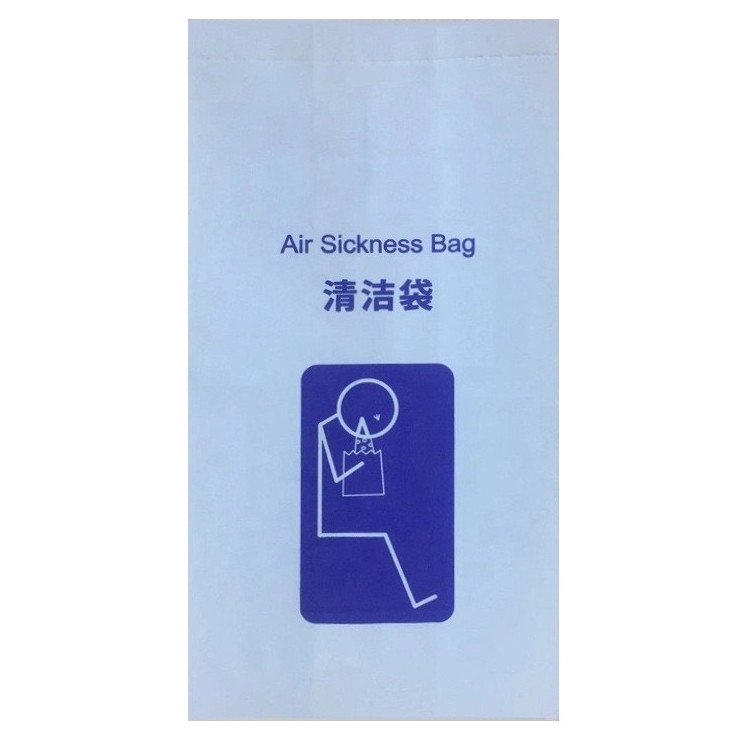
An airsickness paper bag is usually placed in the seatback pocket in front of passengers in airplanes, trains, boats, ferries, and other modes of transport. It is a disposable bag used for passengers who experience motion sickness or feel discomfort during a flight. It is also called an airline sickness bag, sick bag, or vomit bag.
This air sickness bag may look no different from an ordinary paper bag, but it is designed for a specific job. An airsickness bag features an inner polyethylene (PE) laminate that helps it resist vomit and maintain its strength during use, while an ordinary paper bag can absorb liquid and lose strength when carrying vomit.
Benefits of Using Air Sickness Bags

1. Easy and Quick to Use
Not everyone enjoys traveling. Air sickness can occur without warning, especially during turbulence, takeoff, landing, or long flights. Children and older adults may be more susceptible to motion sickness. Not to mention the high cost of cleaning and maintaining aircraft interiors.
In this case, a sickness bag can be within easy reach, giving passengers a hygienic way to manage nausea. A well-made airsickness bag helps contain liquid and reduces the risk of soiling seats, carpets, seatback pockets, clothing, and nearby areas. For airlines, this small, inexpensive item can prevent a larger cleaning problem and create big value.
2. Compact and Lightweight
Airsickness bags can be made flat, lightweight, and compact. This allows airlines to store them in seatback pockets without taking up unnecessary space. Most passengers do not notice this small item until they need it.
They are also convenient for storage, transportation, and replenishment by airline catering and cabin-service teams.
3. An Additional Branding Opportunity
A sickness bag doesn’t have to be plain white. Airlines can print logos, brand colors, passenger instructions, promotional messages, or even third-party advertising on the bag. This turns a practical cabin item into an additional brand touchpoint.
A clear design can also make the bag easier for passengers to identify when they need it. Some airlines have used creative designs to make these bags more noticeable and memorable.
4. Customizable for Different Requirements
There is no standard size for an air sickness bag across different airline companies.
Manufacturers can customize the bag’s size, paper grade, barrier layer, printing, colors, bottom construction, opening style, and other features to meet the requirements of an airline or distributor. This flexibility is especially useful for B2B buyers who order these disposable bags in high volume.
How to Buy Air Sickness Paper Bags?
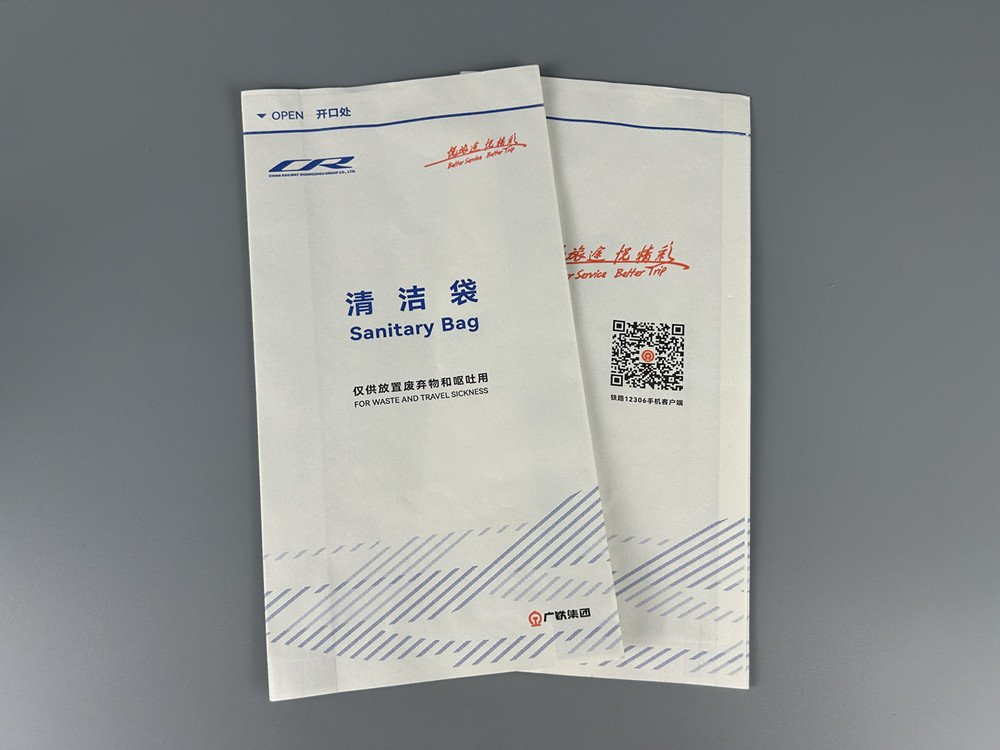
Whether you are an airline, aviation distributor, in-flight catering provider, airport supplier, or aviation consumables importer, providing the manufacturer with complete specifications will make the buying process easier.
Here are the key details to confirm before requesting a quote.
1. Material and Quality
Specify the required paper type, grammage, and any special barrier or moisture-resistance requirements. If you do not know the exact material specifications, send us an existing bag or your available technical requirements. We can evaluate the construction and recommend an appropriate solution.
In general, air sickness paper bags are typically made from 60-70 gsm kraft paper with 23 gsm inner PE lamination. Bag edges and bottom are tightly pasted to ensure no leakage for at least one year when temperatures change from 5ºC to 40ºC.
2. Size and Shape
There is no standard size for air sickness bags across different airlines. As with any shopping or grocery paper bag, measure the air sickness bag’s width, height, gusset depth, folded width, paper thickness, and any other relevant specifications as accurately as possible. For the bottom part, air sickness bags usually come in square bottom and pinch bottom options.
If you are replacing an existing bag, send its dimensions or a technical drawing whenever possible.
3. Printing and Design
For custom printing on the air sickness bags, confirm the printing details:
- Single-color or multi-color
- Printed on one side or multiple sides
- Printed with an airline logo or wordmark
- Printed with instructions or legal information
- English or multilingual printing
- The Pantone color code for the printing
For the printing design file, AI, PDF, CDR, or other vector artwork formats are preferable because they allow the manufacturer to reproduce logos, text, and graphics accurately.
4. Packing and Quantity
Whether you are working on a bid or collecting prices from different suppliers, providing your estimated order quantity is especially important when requesting a quote because volume can affect unit cost. Printing plates, production setup, materials, and packaging all contribute to the final price. These costs are usually spread across the full order quantity.
Generally, the sickness paper bags are packed in 1,000 pcs per carton, with inner white plastic bags to protect from humidity and dust. The cartons can also be customized with the airline logo, item code, quantity per carton, carton number, gross weight, and many other details printed on each carton.
Where to Buy: Order Quality Air Sickness Bags from Panda Paper Roll
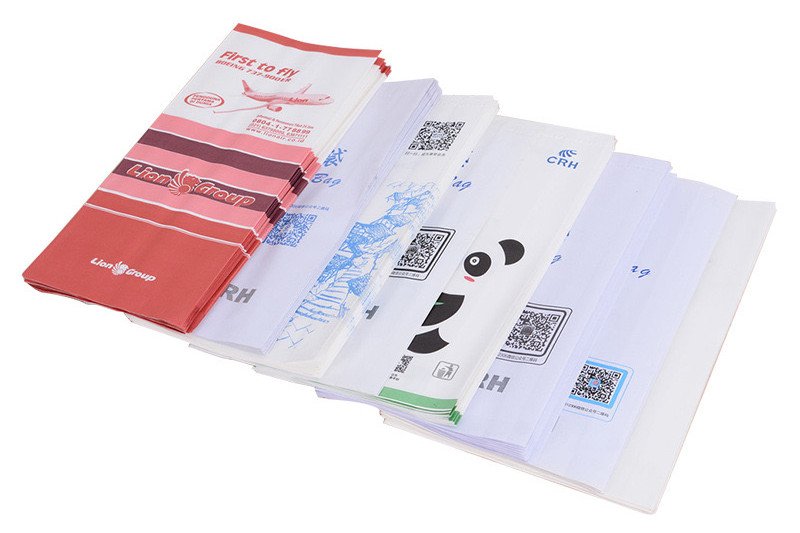
An airsickness bag may look simple and low-cost, but price shouldn’t be the only factor to consider, especially when you order from overseas suppliers. Material consistency, liquid resistance, seal quality, printing accuracy, production capacity, and even the supplier’s experience are all factors you should consider. Our advice is to collect the physical samples from the suppliers so you can check every detail more accurately.
An airsickness bag is a small detail, but it can make a big difference for the aviation industry and passengers. At Panda Paper Roll, we manufacture quality airsickness paper bags and other aviation consumables to your specifications for airlines, aviation suppliers, distributors, importers, and airline catering companies. Contact us today and send your specifications, technical drawing, or physical sample so we can discuss your requirements.


 WhatsApp Us