

There are many different types of print paper available for various applications. Two common types are thermal paper and normal paper. They are used in different print processes and have different properties. In this article, we will walk you through the differences between thermal paper and normal paper.
Let us start with the basics.
What’s Thermal Paper and How Does It Work?

Thermal paper, also known as heat-sensitive paper, is a specialized type of paper that is coated with a chemical that reacts to heat. The chemical, which is invisible, is usually made up of dyes and developers, reacts at high temperatures, and turns black when exposed to heat.
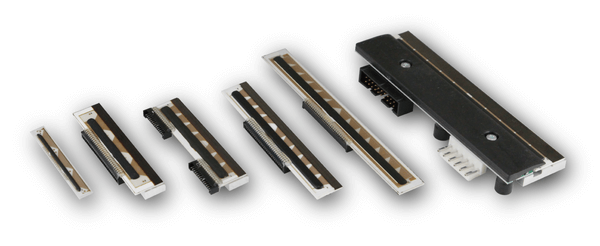
A closer look at thermal print heads
The heat is typically applied by the print head in a thermal printer, which heats up and applies pressure to the paper, causing the chemical to react and create an image or text – this process is called direct thermal printing.
Thermal paper is commonly used in point-of-sale (POS) systems, such as cash registers and credit card terminals, as well as in fax machines, thermal label printers, and other types of thermal printers. Beyond these typical applications, specialized industries like healthcare also rely on thermal paper technology. For example, ECG paper is a critical application in medical diagnostics.
What’s “Normal Paper” and How Does It Work?

Normal A4 paper used in the office
Normal paper, also known as inkjet paper or woodfree paper, is a type of paper that is not coated with any special chemicals. It is typically made from wood pulp or other plant fibers and is used for a wide variety of applications, such as writing, printing, and drawing. A typical example of normal paper is A4 paper, which we use every day at home and in the office.
Normal paper works by absorbing ink or toner onto its surface rather than reacting to heat like thermal paper. This means that normal paper requires a printing process involving ink or toner, such as inkjet or laser printing.
The Difference Between Thermal Paper and Normal Paper
The main difference between thermal paper and normal paper is the way they are printed. Thermal paper is printed using a thermal printer, which applies heat and pressure to create an image or text, while normal paper is printed using an inkjet or laser printer, which applies ink or toner to the paper’s surface.
This thermal printing capability is essential for specialized applications across different sectors, from retail to healthcare, where ultrasound thermal paper is used for medical imaging documentation.
Another key difference is that thermal paper, as introduced above, is usually coated with a chemical that reacts to heat, which makes it sensitive to light and heat. This means thermal paper can fade or darken over time if it is exposed to sunlight and heat, while normal paper is not as sensitive and can last longer.
In terms of durability, thermal paper is often less durable than normal paper, as it can easily be scratched or torn, and the printed image or text can be easily rubbed off. Normal paper, on the other hand, is more durable and can withstand more wear and tear.
Besides these, thermal paper and normal paper differ in other aspects. Here’s a table summarizing the main differences:
| Feature | Thermal Paper | Normal Paper |
|---|---|---|
| Composition | Coated paper with a heat-sensitive chemical layer | Uncoated paper, made of wood pulp or recycled materials |
| Printing Method | Uses heat to produce an image | Uses ink or toner to print text/images |
| Printer | Requires a thermal printer | Laser or inkjet printer |
| Uses | Receipts, labels, tickets | Books, notebooks, general printing |
| Durability | Image can fade over time, sensitive to heat and light | Long-lasting, less sensitive to environmental factors |
| Cost | More expensive due to the coating | Typically cheaper |
| Image Quality | Can produce clear, sharp images | Dependent on the printer and ink/toner quality |
| Printing Speed | Faster printing speed | Slower printing speed |
| Storage | Needs to be stored away from heat and light | Standard storage conditions |
Can I Use Thermal Paper in a Normal Printer?

A4 Thermal paper used in dedicated thermal printers
The short answer is No ❌. You cannot use thermal paper in a normal printer; you can only use thermal paper in a dedicated thermal printer.
This is because thermal paper requires heat to create an image, whereas normal printers use ink or toner to print on paper. In other words, thermal paper can only be used in thermal printers, while normal paper (like A4 paper) can only be used in normal printers, such as laser and inkjet printers.
Trying to use thermal paper in a normal printer can damage the printer and create a fire hazard, as the heat generated by the printer could cause the thermal paper to ignite. Additionally, the chemical coating on thermal paper can cause damage to the print heads in normal printers, which are not designed to handle the reactive chemicals found in thermal paper.
Therefore, using the correct type of paper for your printer or POS system is essential. Using the wrong type of paper can damage your equipment and result in poor-quality prints that are difficult to read and may not last long.
How to Choose the Right Thermal Paper for Your Business?

1. Ensure the Right Size
Thermal paper rolls are not presented in a uniform size. Instead, the thermal paper market offers several paper roll sizes that are appropriate for various application fields. Thus, it would help if you considered several factors rather than randomly selecting the thermal paper roll. Make sure the printer’s width matches the thermal printing roll by first determining it. Remember that longer thermal paper is more cost-effective because it can print more receipts if you take the length into account as well.
To calculate the exact dimensions, yield, and length you need, use our paper roll calculator tool, which helps determine the right specs for your operation.
2. Paper Quality
Not all thermal paper is created equal, so be sure to choose a high-quality paper that is durable and resistant to fading. Using high-quality thermal paper helps prevent spotted printing. Tear a sample of the thermal paper, then heat the back with a lighter to check its quality. A high-quality thermal paper should turn black with a hint of green after heating, and the color block should look consistent.
Some thermal paper rolls are coated with a protective layer that helps to prevent fading and ensure that the printed image or text remains legible over time. Consider choosing a roll with a protective coating if you plan to use it.
3. Pricing
Compare prices across brands and suppliers. While it may be tempting to opt for the cheapest option, it is important to keep the balance between price and quality to ensure that you are getting a product that meets your needs and provides value for money.
Order Premium Thermal Paper Rolls from Panda Paper Roll
Thermal paper differs from normal paper in several ways. There are some benefits of using thermal paper over normal paper. Moreover, when you buy thermal paper rolls, be sure to consider the size, quality, and price to ensure that you are getting what you are paying for.
If you are looking for high-quality thermal paper rolls at competitive prices, look no further than Panda Paper Roll. As a leading thermal paper manufacturer in China with over 25 years of experience, Panda Paper Roll can offer a wide selection of thermal paper rolls compatible with a range of thermal printers and POS systems. We offer worldwide shipping and excellent customer service. Contact us today to learn more about our products and services.
People Also Ask About Thermal Paper
1. What sizes and types of thermal paper rolls are best for POS receipt printers?
The right size depends on your printer model and business use. Most retail POS systems use 80mm (3 1/8″) wide thermal rolls, while mobile or portable printers often need 57mm (2 1/4″) width thermal rolls. Standard lengths are 50 – 80 meters for most POS printers and 10 – 17 meters for mobile and portable printers. For receipt printing, 1-ply thermal paper is common; for durability, 2-ply offers a carbon copy. It’s best to always check your printer manual for compatibility. If you’re going to buy from thermal paper roll suppliers like Panda Paper Roll (that’s us), we provide size guides and customer support to help you choose.
2. How much thermal paper does my business need?
This is a good question because usage varies by transaction volume. But a small café might use one to three rolls per day, while a busy supermarket could go through ten or more. Estimate by tracking daily usage over a week, then multiply by your operating days. That in mind, it’s still a wise decision to order in bulk and save costs and reduce downtime. Panda Paper Roll offers calculators and support to help you plan your supply.
3. Where can I buy thermal paper rolls in bulk?
You can order bulk directly from thermal paper roll manufacturers or distributors. For example, if you buy from us, we have dedicated bulk order pages and customer service for business inquiries. We can actually tell you how much you need based on your operations, and for us to make sure we avoid wastage in orders. Buying in bulk ensures a consistent supply and often comes with discounts. You can also check supplier websites for bulk pricing and delivery options. But honestly, we might be biased here; you’d always get direct-factory rates from Panda Paper Roll.


 WhatsApp Us
Frank, thank you for this comparison article, I really learned a lot because I am debating if to get a thermal printer or a regular ink printer. You helped me decide that I could get the thermal printer for when I don’t need heavy duty printing, and it’s very portable because I don’t have to worry about carrying ink, just paper and the device. I will get the little portable Thermal printer, it’s a smarter idea. I loved your article because it was easy to read and understand. It didn’t have a lot of unfamiliar technical terms, and very clear comparisons of the two different papers. I love that you also emphasized the danger of using thermal paper on an ink printer…this is so important!!! I wish you good fortune in all your endeavors!!
Best regards,
Adelina Alvarez
What is the length of 80*80mm
Please refer to this article at https://pandapaperroll.com/80-x-80mm-thermal-roll-gsm-length-weight/ or contact us at support@pandapaperroll.com.